Most marketing trend pieces end up gathering digital dust. You scan the headlines, bookmark for later and move on.
But when multiple industry reports point to the same shifts – not predictions, but real patterns emerging across UK businesses – it’s worth paying attention. As we enter 2026, several clear trends are reshaping how e-commerce brands allocate budget and measure success.
The good news? Marketing budgets are increasing. Industry research shows around two-thirds of UK marketers expect their budgets to grow this year. For most teams, money isn’t the bottleneck anymore – execution and integration are. Success in 2026 won’t come from outspending competitors or adopting every new AI tool. It’ll come from teams that can coordinate their channels effectively, measure what matters and build strategies that drive business growth – not just impressive platform dashboards.
Below, we break down the five biggest shifts we’re seeing and what they mean for your e-commerce business.
Why SEO and Content Are Outperforming Paid Ads in 2026
For years, the prevailing wisdom has been to pour budget into paid advertising. But 2026 has brought a significant reversal.
SEO and Content Marketing are now outperforming paid channels as revenue drivers.
Industry data shows organic search delivers significantly higher ROI – SEO advertising converts at 2.4%, nearly double PPC’s 1.3%. Meanwhile, social media advertising has fallen significantly as a direct revenue driver compared to previous years. Email, SMS and app push remain strong performers, especially for mid-sized brands.
What’s Changed?
Rising acquisition costs on paid platforms have forced businesses to rethink their approach. UK media spend forecasts show digital advertising costs continuing to grow 8-10% annually. Brands are shifting budget back to channels they own rather than rent – not to chase temporary visibility but to create genuinely useful content for their customers.
This doesn’t mean paid media is dead – far from it. But paid advertising works best when it’s amplifying genuine demand you’ve already created through organic channels, not trying to generate it from scratch.
What This Means for Your Business
Retail brands investing in SEO, content and email flows are outperforming brands relying on paid ads alone. Why? Because organic channels build long-term resilience and trust. They attract users who are actively searching for solutions, rather than interrupting them mid-scroll.
Businesses that invest in strengthening their organic presence – through technical SEO, high-quality content and strategic internal linking – typically attract more qualified traffic that converts at higher rates than paid-only approaches. At Emrise Digital, we help e-commerce brands build this foundation.
If you’re still heavily reliant on paid channels, now is the time to rebalance. Start by auditing your organic performance:
- are your transactional pages ranking for high-intent queries?
- is your content genuinely helpful?
- are you building topical authority in your niche?
For practical tips on improving your organic traffic, check out our guide on 8 Advanced SEO Tips to Increase High-Quality Traffic that Converts.
The Truth About AI Search: It’s Not the Traffic Killer We Feared
There’s been significant concern around AI Overviews and LLMs (Large Language Models) – specifically, that they would lead to “zero-click searches” where users get answers without ever visiting your website.
However, the reality has been more nuanced than predicted. Research shows mixed results: some sites report traffic gains, while others experience declines. The brands performing best tend to have strong authority, product-focused content and robust off-site signals.
Sites heavily reliant on purely informational content have seen the most significant challenges, while e-commerce brands with transactional content and established authority are adapting successfully.
How to Optimise for AI Search
The key strategies emerging:
- Build a strong brand that earns consistent coverage through PR, link building and partnerships – authority signals matter more than ever
- Create content that genuinely resonates with your audience and addresses gaps in what they’re searching for
- Keep your site technically sound – page speed, mobile optimisation and clean architecture all contribute to visibility
At Emrise, we help businesses build this kind of long-term authority through a combination of SEO, content marketing and digital PR. The focus should not be on manipulating search engines, but showing up when your customers are searching for solutions.
Marketing Budgets Are Growing – But Poor Integration Can Hold You Back

Here’s the paradox: around two-thirds of UK marketers expect budgets to increase in 2026. Marketing teams are growing. Creative investment is rising.
Yet many businesses still struggle with getting different channels and teams to work together effectively.
Why Integration Is So Difficult
We’ve all seen it: beautiful strategy presentations that never quite translate into coordinated execution. Too often, strategic plans remain on paper while implementation happens in isolation.
SEO, paid, social, PR and creative all optimise independently, meanwhile missing opportunities to support one another. This isn’t about capability – it’s about structure. Without coordination, each channel optimises independently rather than contributing to a unified strategy.
More budget alone won’t solve this. Better coordination between strategy and delivery will.
The Emrise Approach to Integration
At Emrise Digital, we take a different approach. Rather than operating as separate service providers, we create strategies where every channel supports the others.
For e-commerce businesses, this integrated approach is particularly powerful. Here’s how the channels work together:
- SEO identifies high-intent queries with commercial value
- Content marketing creates helpful blog posts and pages targeting those queries
- Email nurtures users who visited those posts
- Paid advertising retargets users who engaged but didn’t convert
- Social media amplifies the content to reach new audiences
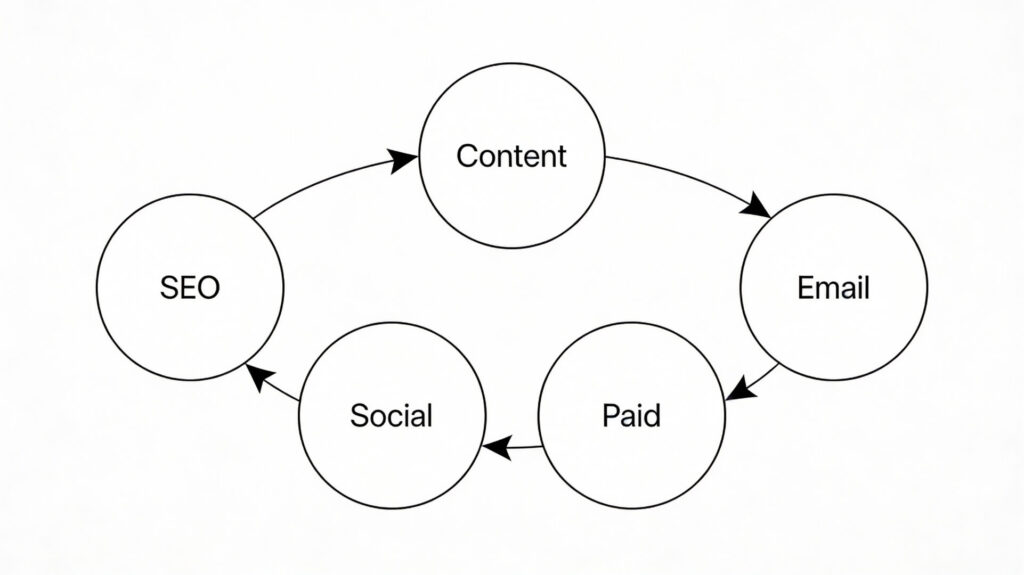
Each channel amplifies the others, creating results that are far greater than the sum of individual efforts.
Learn more about how we approach integration in our blog post on Multi-channel Digital Marketing: The Road to eCommerce Success.
Why Brands Are Finally Moving Beyond Performance-Only Marketing
For the past few years, many businesses focused heavily on short-term performance marketing – CPA, ROAS and immediate conversions. But that’s changing across the industry.
More businesses are allocating significant portions of their budgets to longer-term brand activity, balancing this with immediate conversion tactics.
Industry patterns show:
- Larger businesses lean more brand-heavy
- Smaller businesses stay performance-led (often out of necessity)
- Over half of businesses are increasing investment in performance creative assets
Relying solely on performance marketing creates what industry experts describe as an “overfishing” problem – once you’ve depleted your in-market audience pool, it becomes harder to maintain your metrics. You need brand-building to continuously fill the top of the funnel with new potential customers.
How to Balance Brand and Performance
The right split isn’t identical for every business. Context matters – particularly your growth stage and immediate revenue pressures. What’s critical is making a deliberate choice informed by your own performance data, rather than blindly adopting industry benchmarks.
Why It’s Still Hard to Turn Measurement Insights into Action
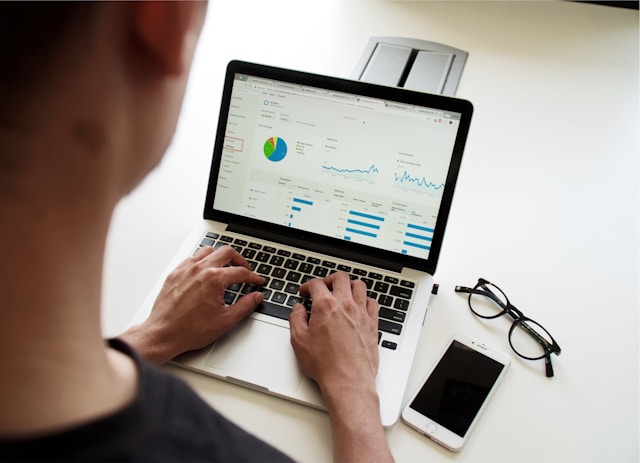
Marketing teams are adopting more sophisticated measurement approaches:
- Customer Lifetime Value (CLV) analysis
- Marketing Mix Modelling (MMM)
- Incrementality testing
These help you understand marketing’s actual contribution to growth, rather than just its efficiency in-platform.
The Problem
Smaller businesses often don’t formally measure effectiveness at all. And even larger businesses that discuss CLV and incrementality often default to CPA when making planning decisions – because more sophisticated insights arrive too late to influence strategy.
This isn’t about lacking the right software. It’s about whether your measurement framework is designed to inform decisions or just document what already happened. If you’re only analysing marketing’s contribution after campaigns end, you’re using analytics as a rearview mirror, not a navigation system.
What to Expect in 2026
The thread running through all five trends is clear: success in 2026 demands coordinated channel execution, measurement that reflects business outcomes and strategies built for sustainable growth rather than short-term platform wins.
These industry-wide patterns confirm what many of us have suspected: the marketing landscape is restructuring itself, but organisational processes haven’t kept pace. Rising costs, integration challenges, ROI pressure and AI uncertainty aren’t unique to your business – they’re industry-wide shifts.
How Emrise Can Help
At Emrise Digital, we’ve built our entire approach around responding to these changes. We don’t just offer SEO, paid ads or content marketing in isolation. We create multi-channel strategies that work together to drive sustainable business growth.
Whether you’re looking to:
- Strengthen your organic presence to reduce reliance on paid ads
- Optimise for AI search and build long-term authority
- Integrate your marketing channels for better results
- Find the right brand vs. performance balance
- Set up proper measurement to prove ROI
Ready to get started?
Get in touch with us today on +44 0115 778 6950 or hello@emrise.co.uk to find out how we can help your e-commerce business thrive in 2026.